9 minutes
Hubstaff API
The Hubstaff API lets you access and manage Hubstaff data programmatically. You can use it to build custom reports, integrations, dashboards, and automated workflows.
What can you do with the Hubstaff API?
You can use the Hubstaff API to:
- Retrieve time, activity, project, member, attendance, and location data.
- Create or update supported Hubstaff records.
- Build custom reports and dashboards.
- Connect Hubstaff with internal or third-party systems.
- Automate workflows using API requests and webhooks.
Open the Hubstaff Developer Portal
Visit the Hubstaff Developer Portal for current information about authentication, pagination and rate limits, HTTP status codes, webhooks, developer tools, and available endpoints.
Choose an authentication method
Hubstaff supports three authentication methods. Choose the method that best matches how your integration will run.
OAuth 2.0 with OpenID Connect
Use OAuth when your application needs multiple Hubstaff users to sign in and authorize access to their accounts.
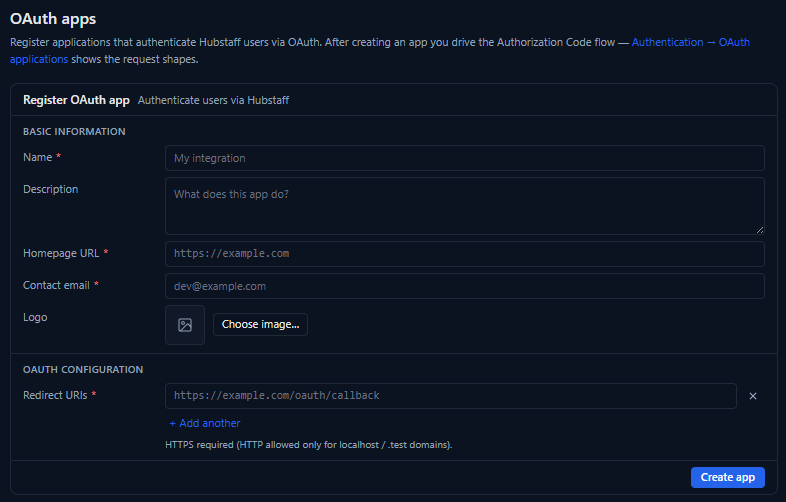
To register an OAuth application, sign in to the developer portal and open Account > Apps, or visit the OAuth apps page. Enter the application information and one or more valid redirect URIs, and then select Create app.
Personal access token
Use a personal access token (PAT) for scripts, internal tools, and other server-side integrations that run as your Hubstaff user.
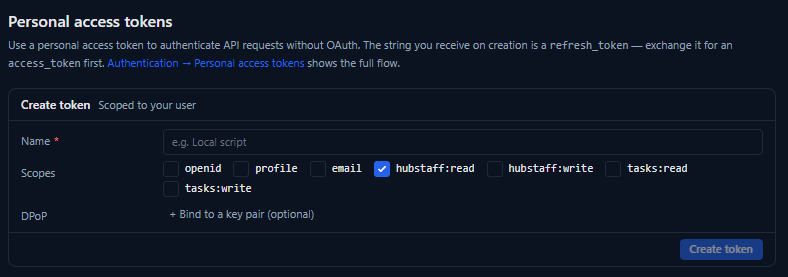
To create one, sign in to the developer portal, open Account > Personal access tokens, enter a descriptive name, select only the scopes your integration requires, and then select Create token.
Organization access token
Use an organization access token for shared, long-running server-side automation that needs to act as a selected member of an organization. Common examples include scheduled scripts, CI jobs, and internal integrations.
An owner, manager, or member with permission to manage IT settings can create an organization access token from the Hubstaff web dashboard following the steps below:
Step 1
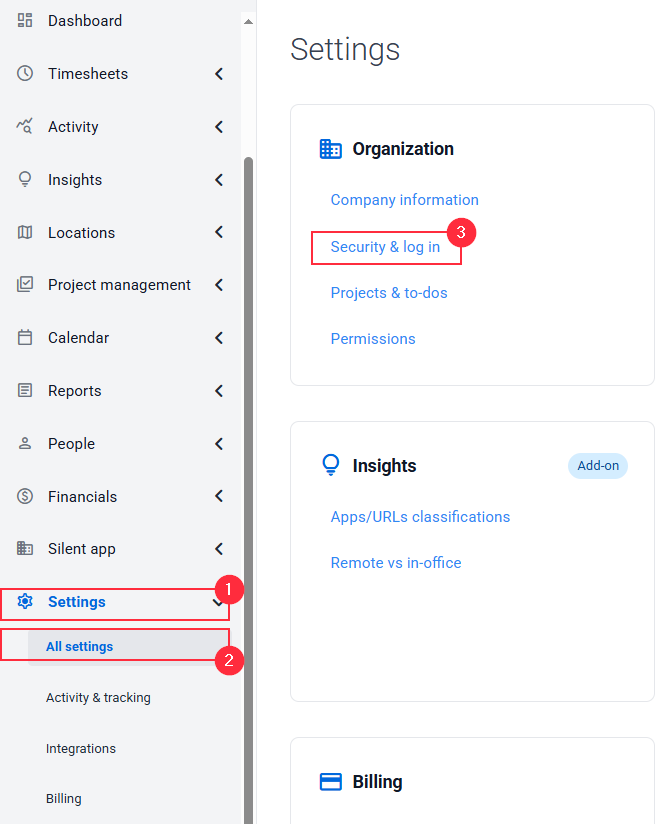
From the left sidebar, click Settings > All Settings. Then, under Organization, click Security & log in.
Step 2
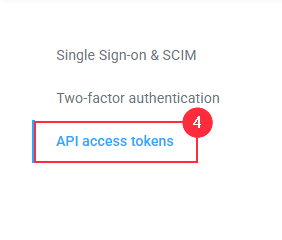
Select API access tokens and click the Create token button
The organization access token authenticates as the member assigned to it and has the same organization role and access as that member.
Unlike a PAT, an organization access token is sent directly as a bearer credential. It does not require a token exchange, refresh process, or browser authorization flow.
Organization access tokens are created, reassigned, and revoked from the Hubstaff web dashboard. For more information, see Organization access tokens in the developer portal.
Review the Authentication section of the developer portal for current authorization steps, token requirements, scopes, and request examples.
Find API endpoints
In the developer portal, general guidance appears near the top of the navigation menu. This includes authentication, pagination and rate limits, HTTP status codes, webhooks, and other developer resources.
Available API resources appear under Endpoints. Select a resource, such as Activities, to view its supported requests, URLs, parameters, and response details.
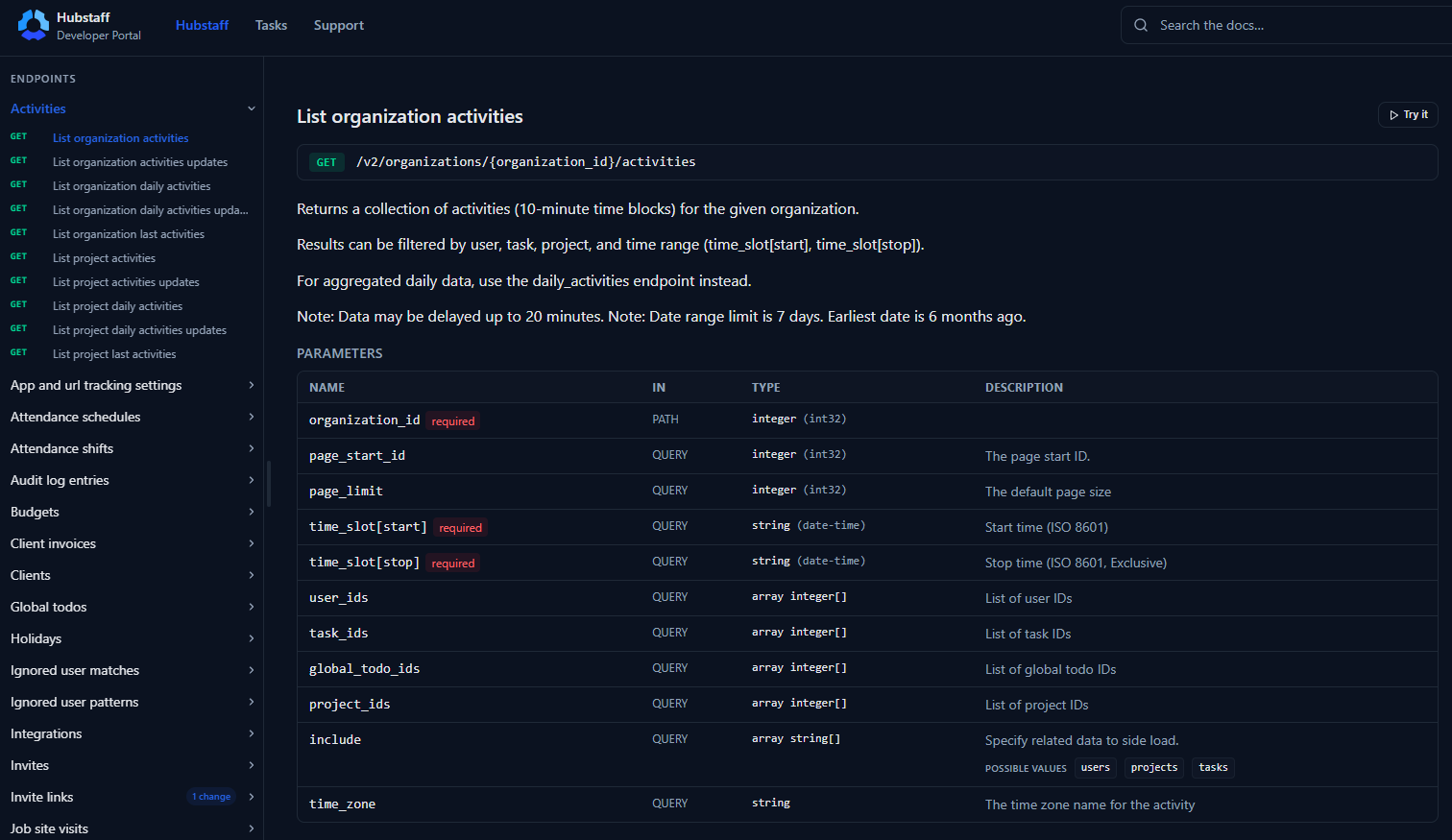
Because endpoint groups and individual requests can change, use the developer portal rather than maintaining a separate list of endpoints in this article.
Using Hubstaff Tasks?
Before building an integration, confirm whether the data you need belongs to Hubstaff Time Tracking or Hubstaff Tasks.
Before you begin
- The information an integration can access depends on the authorized user’s role and permissions.
- Use HTTPS for all API requests.
- Select only the authentication scopes your integration needs.
- Review the developer portal for current pagination, rate-limit, authentication, and endpoint requirements.
- Hubstaff Time Tracking and Hubstaff Tasks use separate APIs and documentation.